
Trade Objects in Colonial North America
Tokens of Value
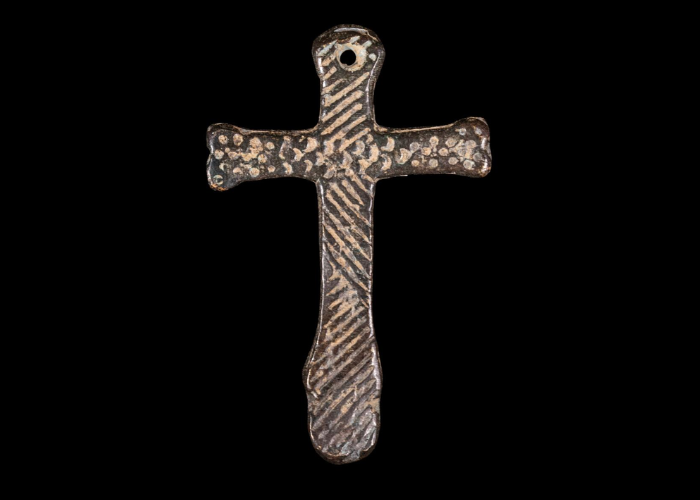
17th Century French Canadian Forged Iron Cross Pendant. Typical of an item that would have been in common use in the colonies of New France at the height of the fur trade era.
What factor most drove the colonization of North America by England, France, and Spain? The answer to that question might surprise you. While every individual settler had their own reasons for making the dangerous voyage across the Atlantic, there's ample evidence that the primary motivator for the race to colonize the New World was commerce. Adventuring entrepreneurs flooding the continent in the 17th and 18th centuries saw North America as an untapped storehouse of resources, and chartered business concerns operating under the full sanction of European crowns raced to establish their own footholds. Vital to this effort was the widespread distribution of trade goods among the Indigenous peoples with whom these traders dealt.
European-manufactured items of all kinds offered a convenient medium of exchange in these transactions. While Indigenous peoples were experienced in the working of copper and silver, iron was rarely used by native cultures. Certain Inuit peoples knew how to cold-forge tools from iron gathered from meteorite fragments, but the widespread use of iron by most Indigenous societies grew from manufactured goods received from European traders. By the end of the 17th century, iron trade goods acquired in exchange for furs were in common use among Native peoples. Iron implements, tools, and adornments were valued both for their manufactured purpose and as a source of metal that could be worked and reworked as needed to create a more useful object. A European religious ornament, for example, might be remade into a tool, a knife blade, or an arrowhead.
"Iron implements, tools, and adornments were valued both for their manufactured purpose and as a source of metal that could be worked and reworked as needed to create a more useful object."
Crosses, in a variety of metals, were often used as trade goods. Native peoples had long used the symbol of the cross for purposes entirely unrelated to the Christianity of the European missionaries to represent aspects of their own beliefs. The two-armed cross, commonly known to Europeans as the "Cross of Lorraine," and widely distributed by French Jesuit missionaries active in the 18th century, was especially popular in trade with native tribes, who may have likened the shape to that of the dragonfly, a common motif in certain Indigenous cultures.
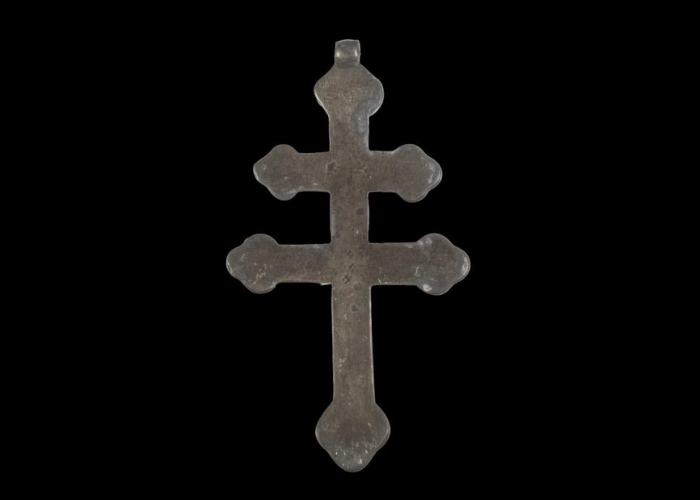
Iron Trade Cross by Luckhaus. Fashioned from cast iron and bearing the mark of Peter Caspar Luckhaus, this Cross of Lorraine was made in Germany for trade export to Canada.
As trade continued to develop under the domination of well-organized trading companies, assortments of generic manufactured goods gave way to items specifically manufactured for use in trade. While iron tools, implements, and weapons would always have a role in these transactions, silver emerged as the dominant trade metal during the latter part of the 18th century and on into the 19th. By the end of the "fur trading" era, trade goods were largely replaced by coin-like tokens, struck in denominations representing the value of various quantities of pelts. Today, archaeologists, collectors, and connoisseurs appreciate surviving trade objects as relics of a vital period in the history of North America and its people.
North American Collection
Date & Time: Friday, May 15th - 11 AM EDT
Location: Thomaston Place Auction Galleries, 51 Atlantic Highway, Thomaston, Maine
Bidding Options: In-person, by phone, or by absentee bid. Online bidding options are available at thomastonauction.com
Preview: Open to the Public, Monday, May 11th through Thursday, May 14th, 11 AM to 5 PM EDT
For details on how to participate, visit our How to Bid page or complete the Phone/Absentee Bid Form to register. With limited seating and phone lines available, collectors are encouraged to register early to secure participation.
References
Quimby, George Irving, Indian Culture and European Trade Goods, Madison: University of Wisconsin Press, 1966. Full text of this series of monographs is available online.