
The Cozy Maverick: Sister Parish and the Rise of American Country Design
Design that never looked "designed." Luxurious comfort with a touch of country charm. Those were the hallmarks of one of 20th Century America's most distinguished decorators, an independent-minded woman who moved away from the rigorous formalism of past tradition to create a design idiom all her own, one which continues to influence devotees of a gentle, pastel-shaded style that resonates down to the present day.
Her given name was Dorothy Mae Kinnicut, but to her clients, a list that extended from the elite of New York society to the Kennedy White House, she was simply "Sister." Sister Parish, that is -- who discovered early on in life exactly what she wanted to do and then went ahead and did it. She was born in 1910, the only daughter of a prominent Wall Street banker and his socialite wife, picking up the nickname "Sister" from a younger brother who found "Dorothy" daunting. She received the education expected of a 1920s debutante, and, as was expected of a 1920s debutante she married at a young age a husband of equal station, banker Henry Parish II. But conventionality had its limits. Sister had her own views and her own goals, and as she found while decorating the newlywed couple's New Jersey farmhouse, a sense of style that owed nothing to the "correct" trends of the moment.
The farmhouse lent itself to an airy, sunny decor, and when she couldn't find what she wanted in Manhattan's shops, she improvised. She brightened dowdy old furniture with a fresh coat of white paint. Dusty formal draperies gave way to bright cottons fashioned from bed ticking. Grim varnished floors disappeared beneath bright splashes of color. Friends noticed. The "right people" noticed. And when the Depression made the banking profession somewhat less than secure, Sister Parish went to work.
With no formal training but an unerring eye for brightening a room, Sister Parish hung out her shingle as a professional decorator, and took on friends and friends of friends as her first clients. The Thirties were a decade where traditions existed to be broken, and Sister's satisfied clients spread the word among the Manhattan smart set that here was a woman who could breathe fresh new life into a tired summer house with gallons of paint, rolls of brightly-printed chintz, some judiciously-selected antiques, and a willingness to fly to wherever whimsy might carry her. She used her own summer home on Islesboro, Maine as a testing laboratory for new ideas, and as a staging spot to display those ideas to potential clients. Her business grew steadily, pausing only for an interval during World War II. After the war she built a collaboration with the noted British design firm of Colefax and Fowler, which added elements of classic English country house design to her own vision.
She continued to serve prominent clients, among them New York philanthropists Brooke and Vincent Astor, whose Northeast Harbor summer cottage "Cove End" bore the indelible mark of Sister's style. Taking advantage of an impressive collection of American country antiques assembled by Cove End's previous owner, Sister and her new business partner Albert Hadley freshened and brightened the five-bedroom cottage to bring out its cozy seaside ambiance in Sister's trademark "just enough but not too much" style. With an engaging mixture of antiques, pieces brought up and restyled from a previous Astor residence, and Mrs. Astor's own collection of artwork and memorabilia, Sister's take on Cove End would set the basic style the home would maintain even after subsequent tweaks and redecoration.
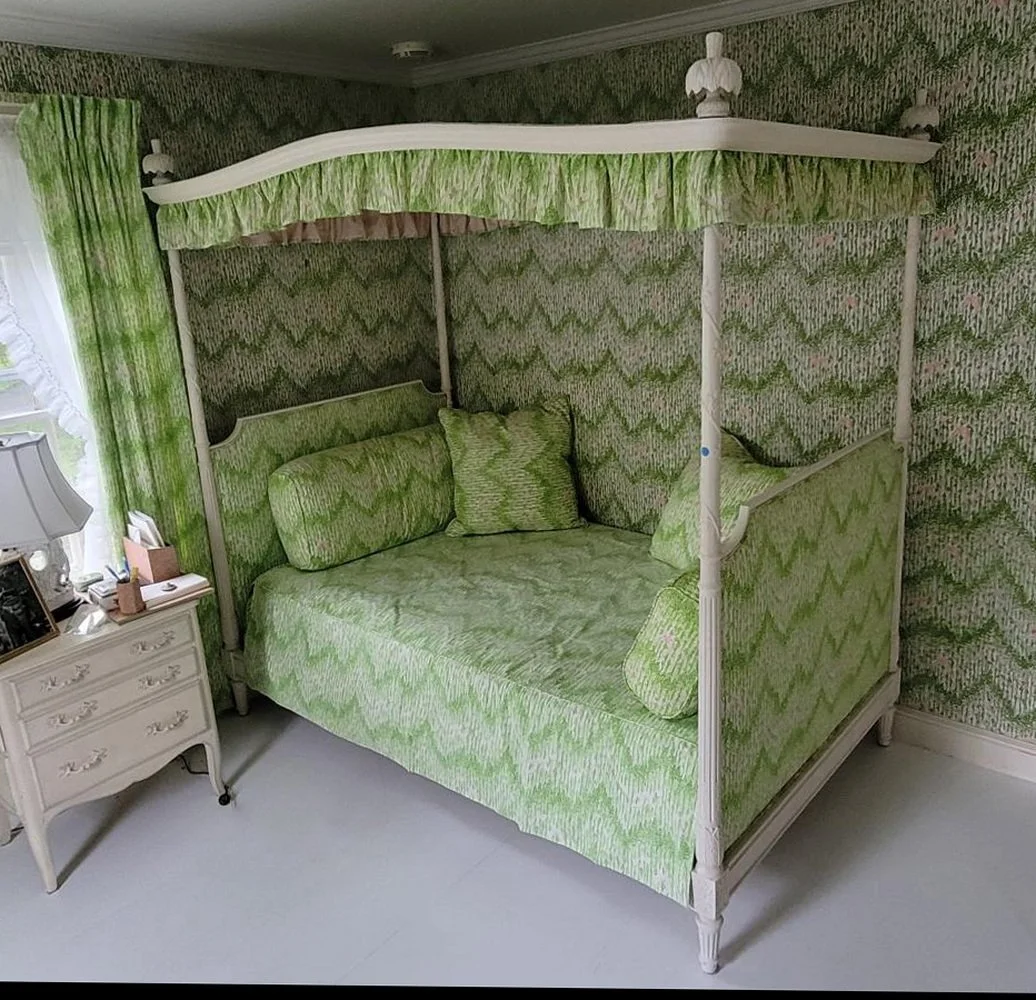
Up for Bid: A Rare Sister Parish Twin Canopy Daybed
Don’t miss this exceptional opportunity in our upcoming auction: Lot 1145 is a charming white-painted wooden canopy daybed frame. Crafted in America circa 1940s–1960s, this elegant twin-size piece captures the timeless spirit of traditional American design.
From the estate of Brooke Astor and acquired from Cove End, the summer residence in Northeast Harbor, Maine.
Sister's career reached its peak shortly after she concluded the Astor project when she was engaged to participate in the redecoration of the White House under the supervision of First Lady Jacqueline Kennedy. Mrs. Kennedy and the strong-willed designer clashed over fine details of the project, but the Yellow Oval Room of the White House still retains Parish touches even today.
Sister's career continued unabated through the 1970s and 80s, her casual country style moving from an unusual diversion for the wealthy to a vital part of mainstream American design. Her influence was even felt in England, where in 1988 the Duchess of York engaged for a major country-house renovation, only to have the project vetoed by the Queen herself, who felt that any such project should be undertaken only by an English designer. But there was no denying the significance of the Sister Parish touch -- her work inspired an entire generation of decorators, with prominent designers from Ralph Lauren to Laura Ashley to Martha Stewart all paying obeisance to her legacy.
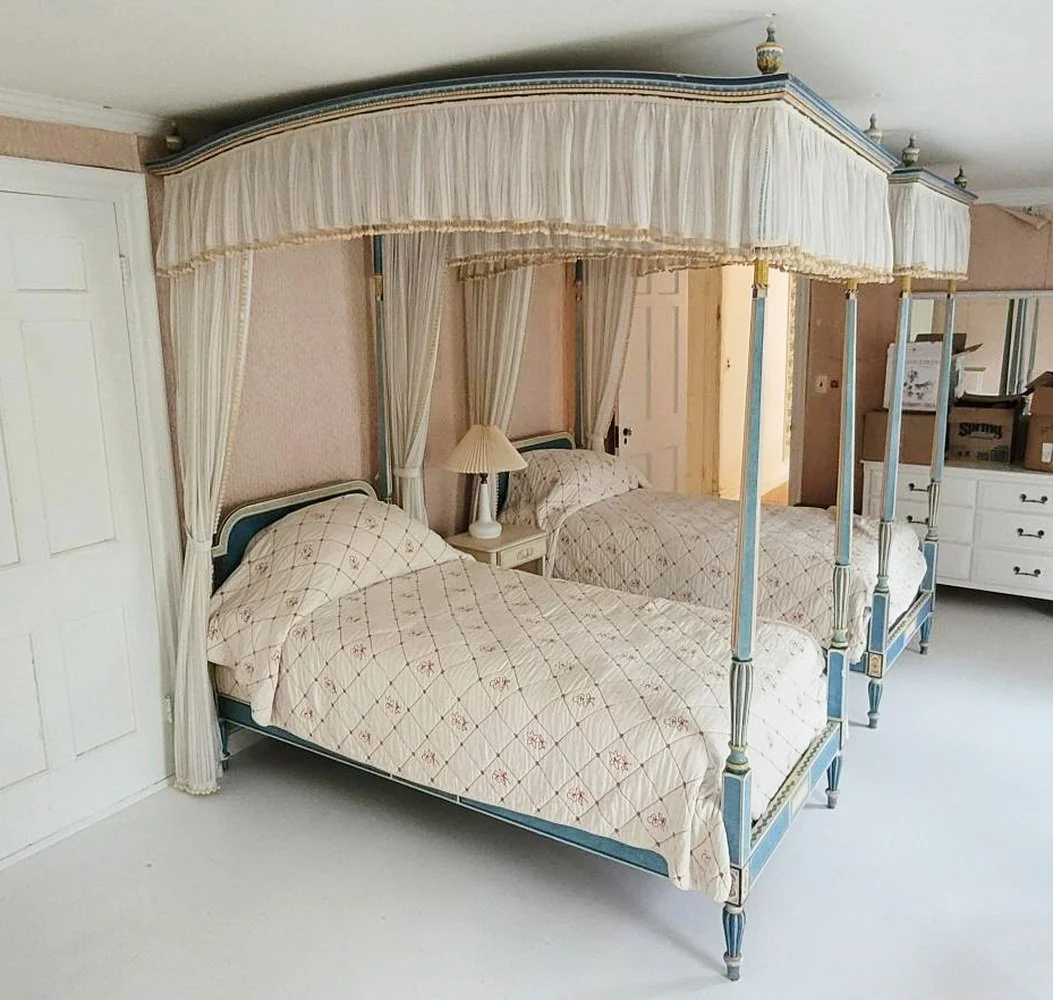
Featured in Our Auction: Matched Pair of Sister Parish Canopy Beds
Lot #1147 presents a rare matched pair of painted twin-size wood canopy bed frames, American, circa 1940s–1960s. These exceptional four-poster beds showcase molded and arched cornices, finely fluted and turned posts crowned with acorn finials, and reeded side rails. Finished in a soft blue with cream and gold accents, they exude timeless elegance.
Sister Parish died, still working, in 1994, just as the "shabby chic" trend was taking hold, its painted cottage furniture as clear a nod to Sister's innovations as could be offered. And with the rise of "cottagecore" as a design and lifestyle trend, her legacy lives on well into the twenty-first century. Sample some of the best of that legacy as we auction selected items from the Northeast Harbor estate of Brooke and Vincent Astor in our Summer Grandeur Auction, starting Thursday August 28th. To read more about the Brook Astor Estate and the special collection please visit:
From Manhattan to Maine: Discover the Old-World Charm of the Brooke Astor Estate
For private viewings or registration support, please call us at +1 (207) 354-8141.
For all other enquiries, please contact us.