
From The House of Steinway To You—The Piano Builders Who Built a Legend
Many consider the piano to be the foundation of Western music. Advocates of the violin and the organ might debate that statement, but the fact remains that had the development of stringed keyboard instruments taken a different course European-rooted music would sound very, very different. And the piano in its modern form owes much to the efforts of the groundbreaking firm of Steinway & Sons.
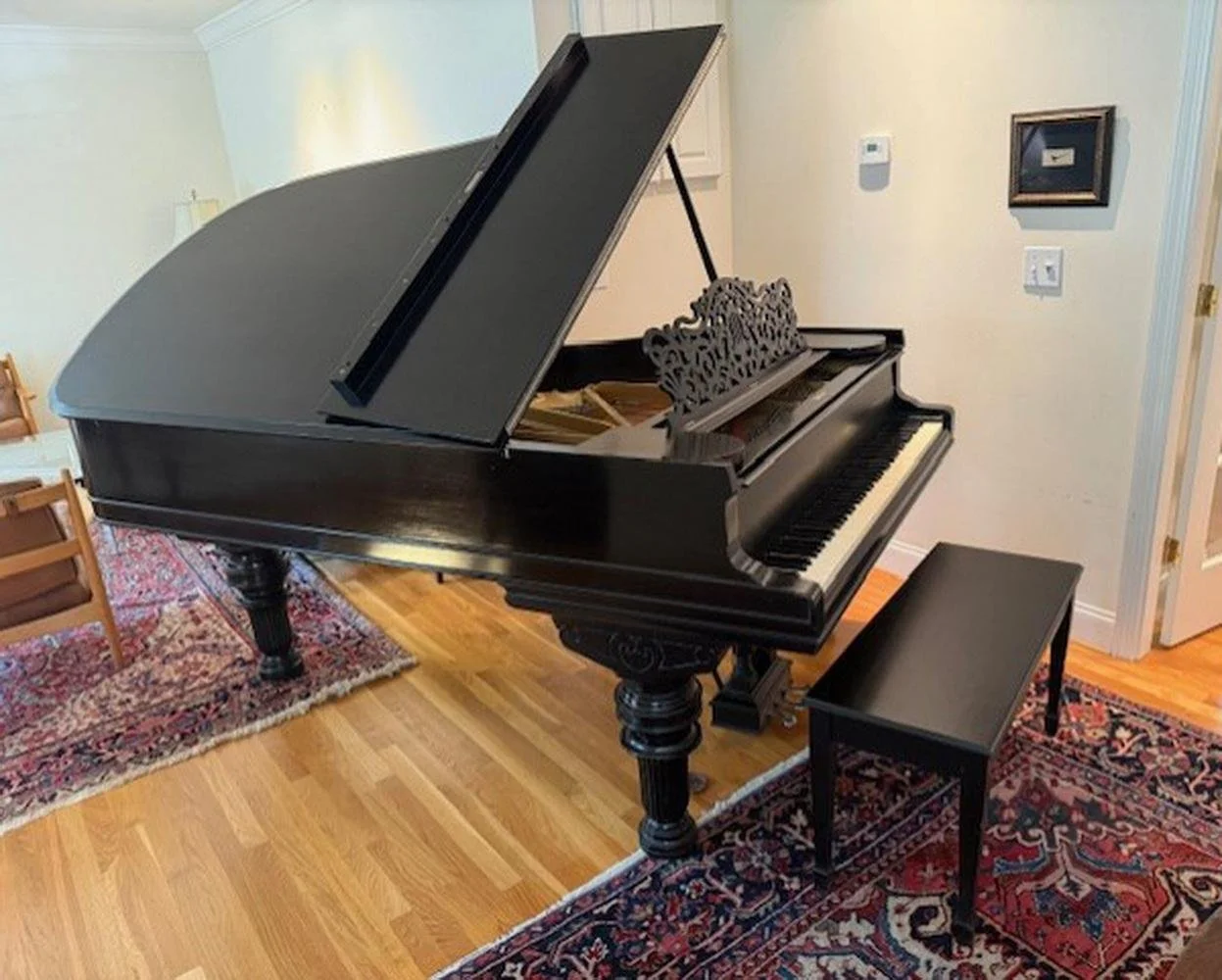
Lot 4008 1872 STEINWAY 85 KEY CONCERT GRAND PIANO MODEL D
Transport a music lover back to the time of Mozart, and allow them audience as the master himself performs at the keyboard, and the sounds they hear will be familiar, yet not. A piano of Mozart's day was recognizably a piano in both appearance and overall mechanics, but the sound it produced differed noticeably from that produced by a modern instrument.
All-wooden frames, leather-covered hammers, drawn-iron strings tuned at low tension, five-octave keyboards, even the milder resonance of the square or rectangular case produced sounds of a softer, more fragile, even ethereal quality hinting of its harpsichord ancestry when compared to the full-bodied sound produced by an instrument built a mere century later. While the piano traces its roots to the Renaissance, the instrument took its modern form only in the latter half of the nineteenth century.
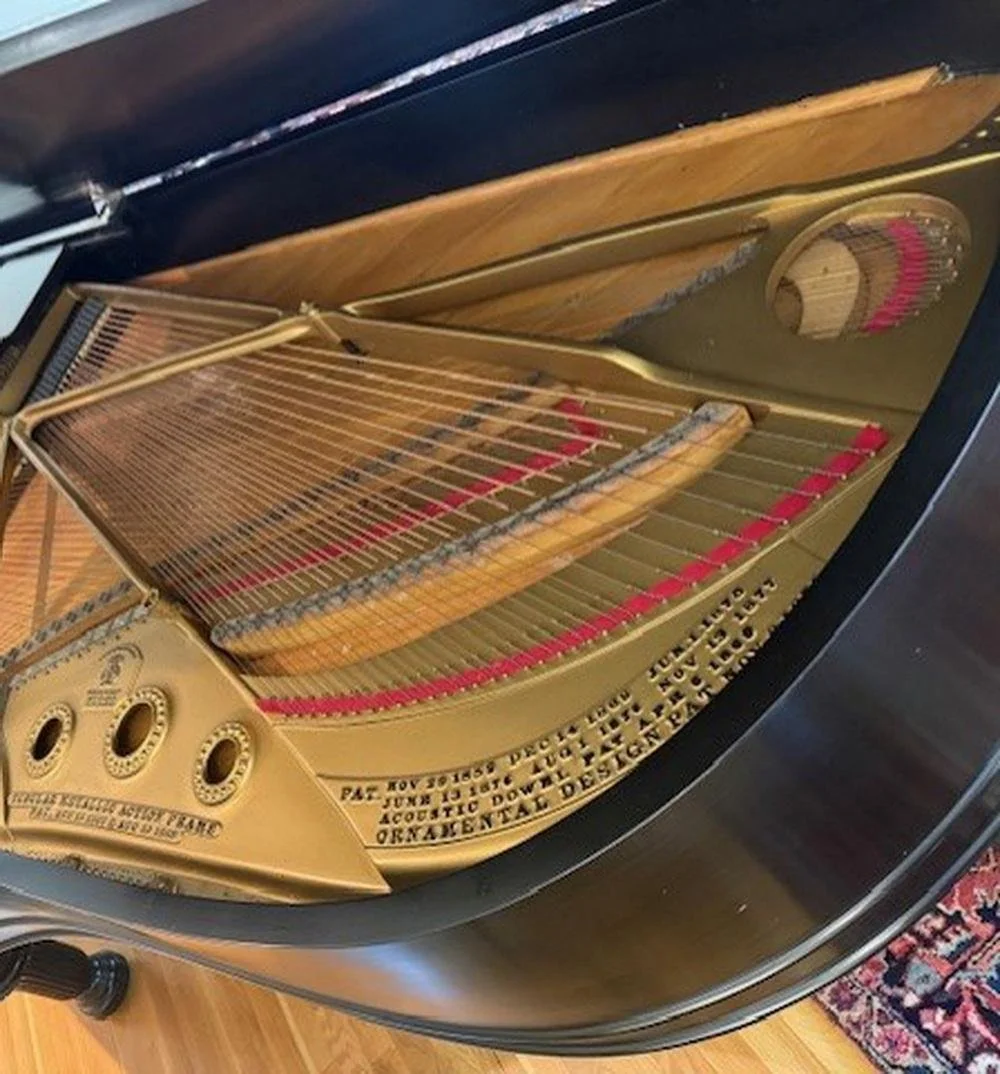
Lot 4008 1872 STEINWAY 85 KEY CONCERT GRAND PIANO MODEL D
A carpenter from a small German town in the Harz Mountains had much to do with this evolution. His name was Heinrich Engelhard Steinweg, and it was his apprenticeship under a master organ builder that kindled his love for music. Away from working hours he experimented, and taught himself the art of piano building, setting up an impromptu workshop in his kitchen. By the end of the 1830s his work earned him a reputation as an artisan of unique skill and by 1850 he determined to carry that reputation with him to a new land.
Arriving in the United States, and adopting the Anglicized name of Henry E. Steinway, he set to work on a new idea destined to change the art of piano building forever. Steinway's German-built pianos followed the accepted European pattern, with strings stretched across the soundboard in neat parallel rows. But this structure introduced a significant limitation. The longer or thicker the string the more resonant the sound, with larger bass strings producing a rich, luxuriant tone, and larger mid-range strings a dense, enveloping warmth. A parallel-stringed piano can achieve such tonal complexity only with a soundboard and a case that is prohibitively large, and extremely difficult to keep in proper tune. Henry Steinway reasoned out a better way.
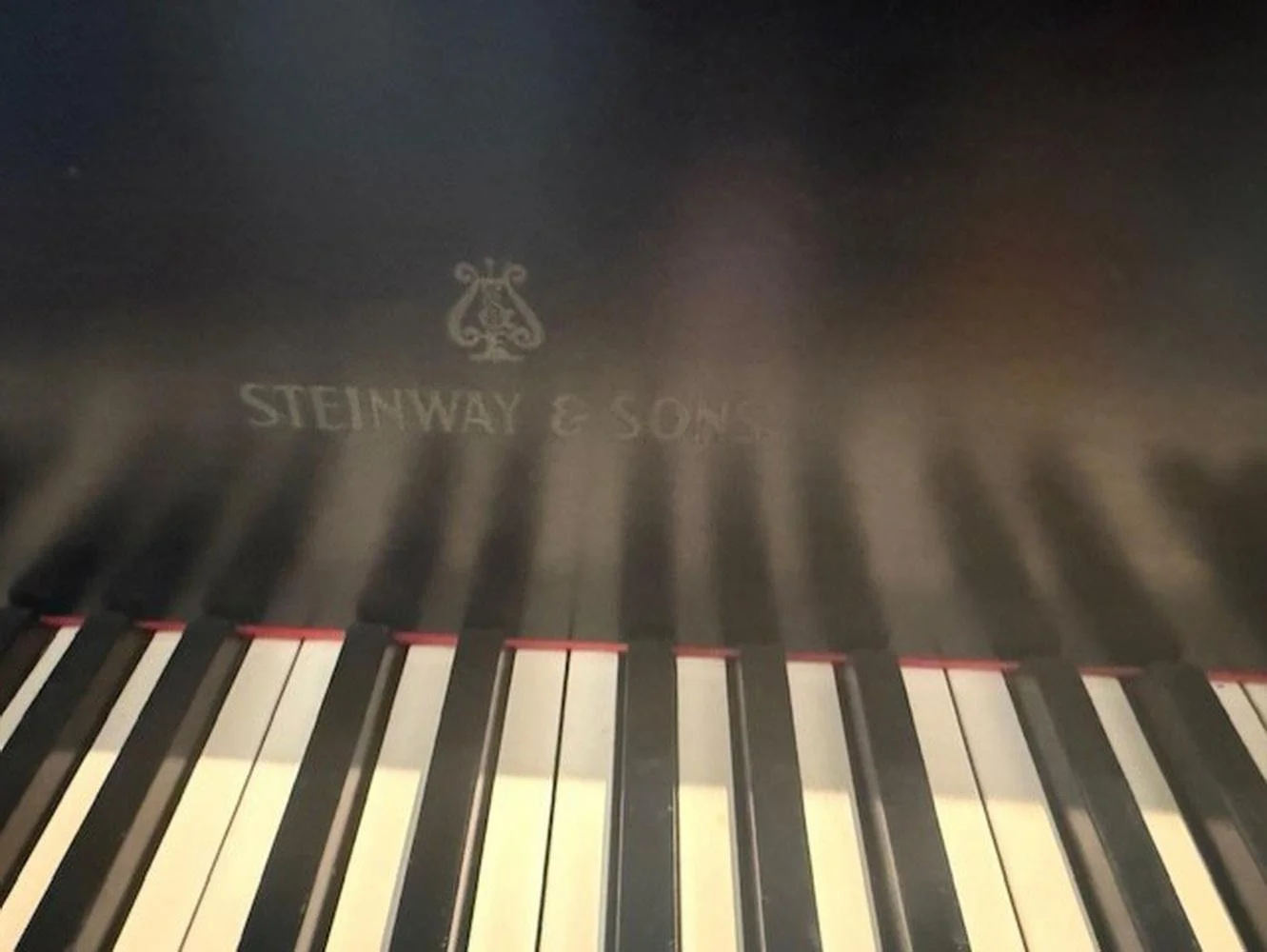
Lot 4008 1872 STEINWAY 85 KEY CONCERT GRAND PIANO MODEL D
Using a gracefully curved cast-iron frame, Steinway refined the idea of arranging the strings in two levels, with the treble and midrange strings fanned at a wide angle across the lower level and the bass strings arranged over them at an opposing angle. The piano case itself was curved to fit the soundboard, allowing a focused and highly complex resonance, while felt-covered hammers struck the strings with greater force and less distortion. Although piano builders had experimented with various cross-stringing and fan-stringing methods as far back as the 1820s, Steinway's invention, which he patented in 1859, would revolutionize the instrument.
That revolution didn't occur overnight. Well into the 1860s, the old-fashioned parallel-stringed square piano continued to dominate the market. The exhibition by the Steinway firm of two of its concert grand pianos at the Philadelphia Centennial Exposition in 1876 brought world attention to the refinements made by Henry Steinway and his sons. Over the final quarter of the 19th Century, evolving from its original 85-key seven-octave design to the modern 88-key seven-and-a-quarter octave range, the Steinway Concert Grand Model D stood as the pinnacle of piano design, specified for use on the finest stages by the world's leading musical artists, as well as the ultimate prestige purchase for the conservatory rooms of the finest Gilded Age estates.
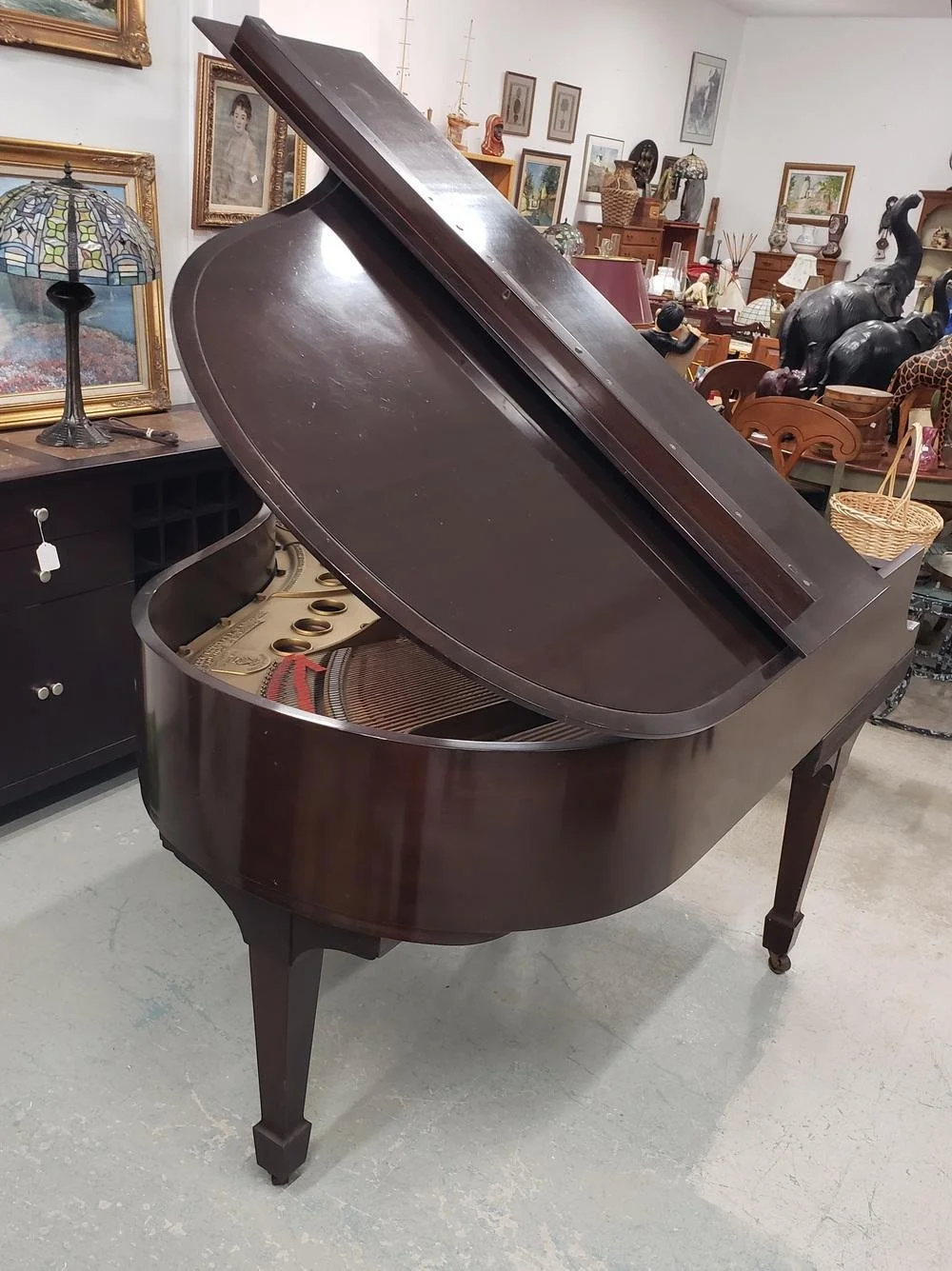
Lot 4007 1933 STEINWAY PIANO MODEL M
But the Steinway firm had no desire to confine its clientele to the upper levels of society. Henry Steinway had come from humble roots, and he believed that every home deserved the joy of music. His sons carried forward that idea with piano models built with the same commitment to quality, but in smaller sizes to fit multiple price points. The Model D when introduced was part of a line that included models A, B, and C, and as the company grew and evolved, additional models were added. In tune with the times as the 20th Century dawned, Steinway & Sons broadened its appeal to the growing middle-class market by introducing its famous "Small Grand," the model M.
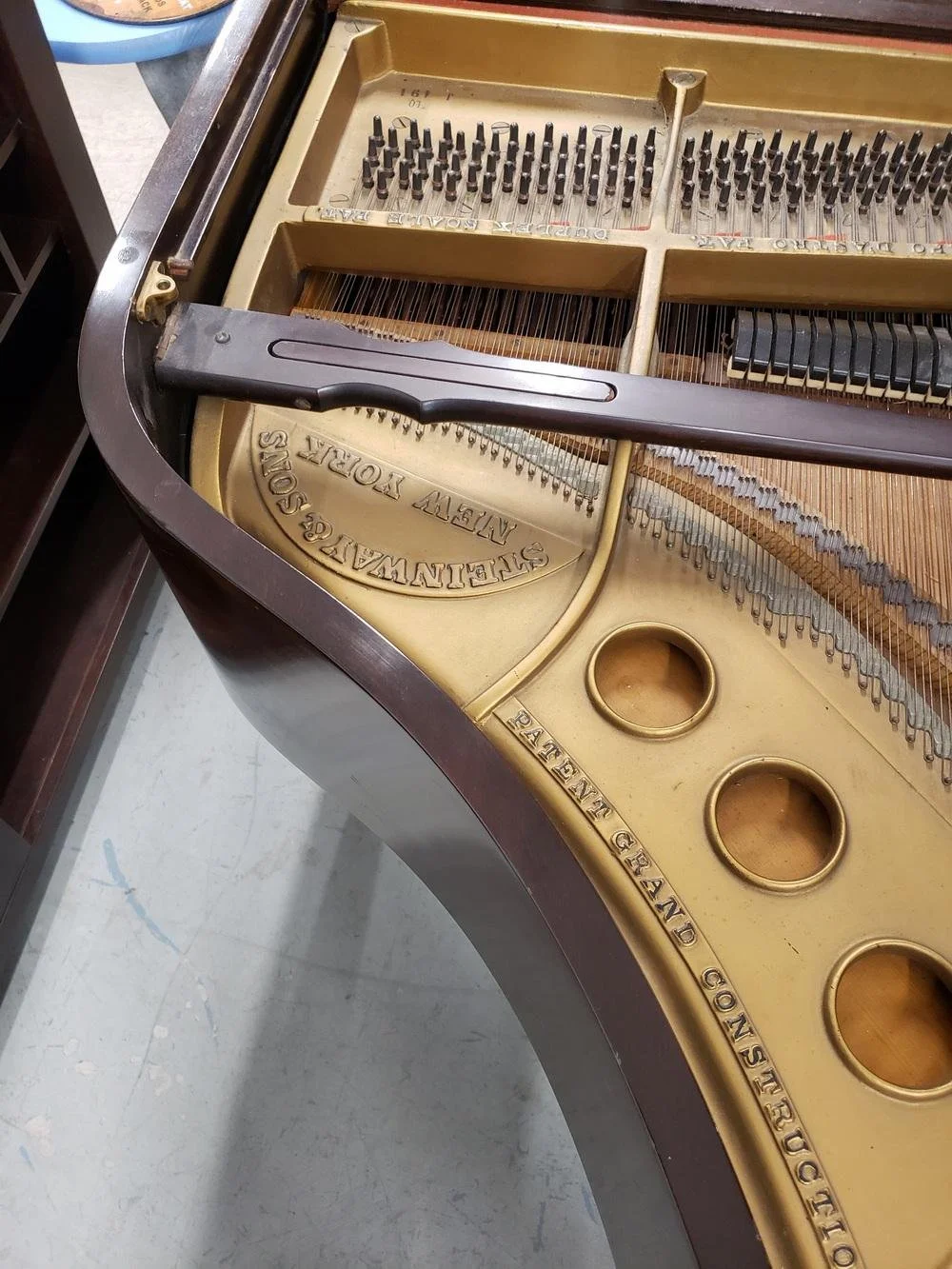
Lot 4007 1933 STEINWAY PIANO MODEL M
First offered in 1911, the Model M proved to be one of Steinway's greatest successes. Its length varying from a compact five feet six inches to five feet seven inches depending on the model year, the Model M was scaled to fit comfortably in a corner of the average living room, while offering a richness of tone far beyond the conventional slam-bang uprights of the day. The "Small Grand" became the "Miniature Grand" before earning, in 1927, the name that defined it -- the Steinway Baby Grand. Generations of piano students have learned to play on Baby Grands, and generations of students have gone on to become lifelong music lovers because of the Baby Grand.
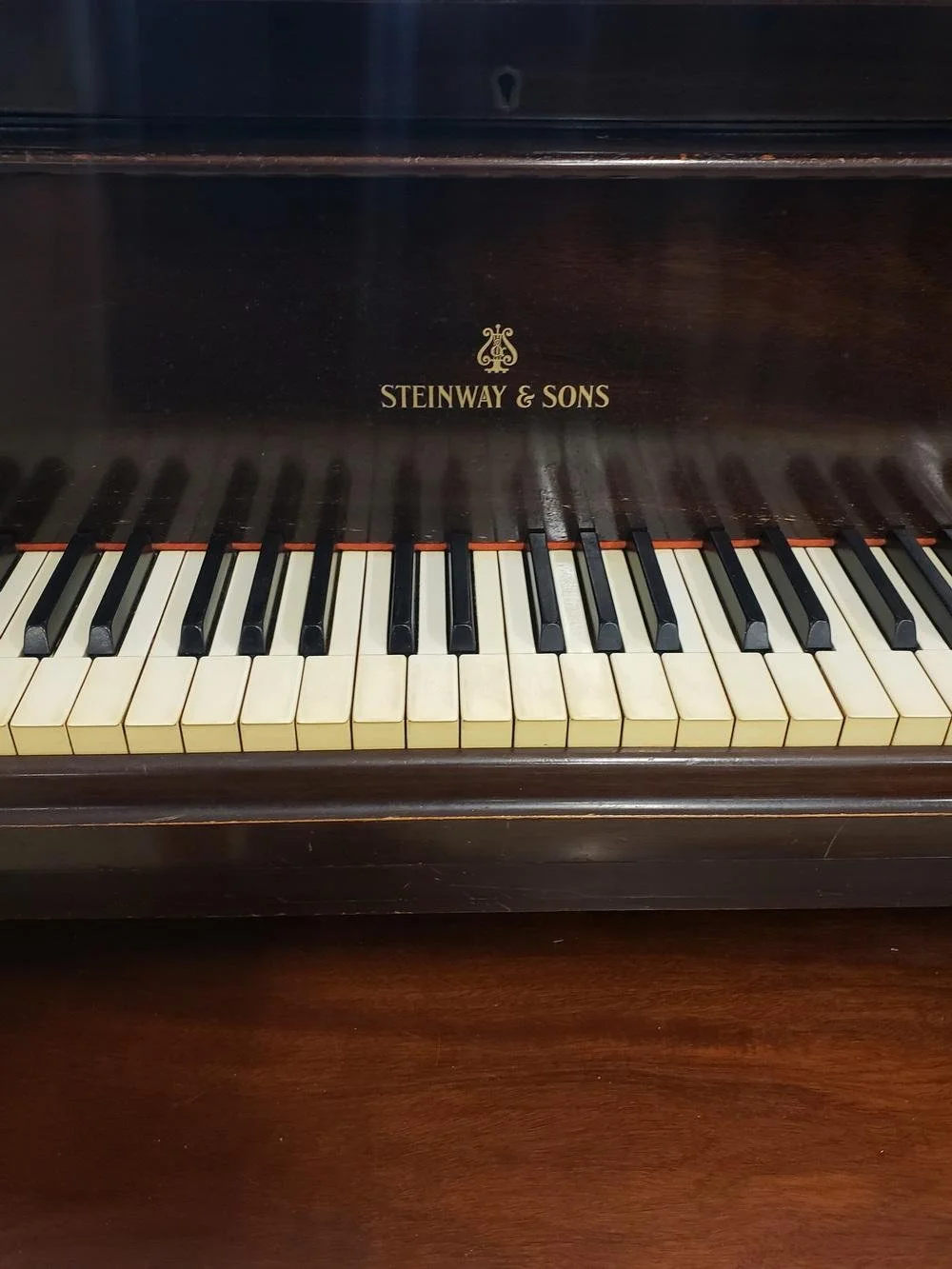
Lot 4007 1933 STEINWAY PIANO MODEL M
Steinway continues to manufacture both the Model D and the Model M down to the present day, and they also maintain a thriving business in the restoration of antique Steinway instruments, thus continuing their family legacy of careful craftsmanship across three centuries. Thomaston Place Auction Galleries is proud to offer outstanding specimens of these two legendary instruments for your consideration in our Autumn Majestic auction.
Don’t Miss Your Chance
These rare and exceptional Steinway pianos will be offered on Day 4 during our upcoming auction November 9th, 2025, beginning at 11:00 AM EST.
Phone bidding and in-person registrations are limited—secure today by calling 207-354-8141 or by submitting a Phone/Absentee Bid Form.
For questions on bidding, visit our How to Bid page, or please contact us directly.
For all other enquiries, please contact us.