
The Gagetown Hookers: Restoration through Rugs
Unique in the annals of country collectibles stand the work of an unassuming rural couple from a tiny New Brunswick town, and unique too is the link they share with another couple in the world of Maine Americana.
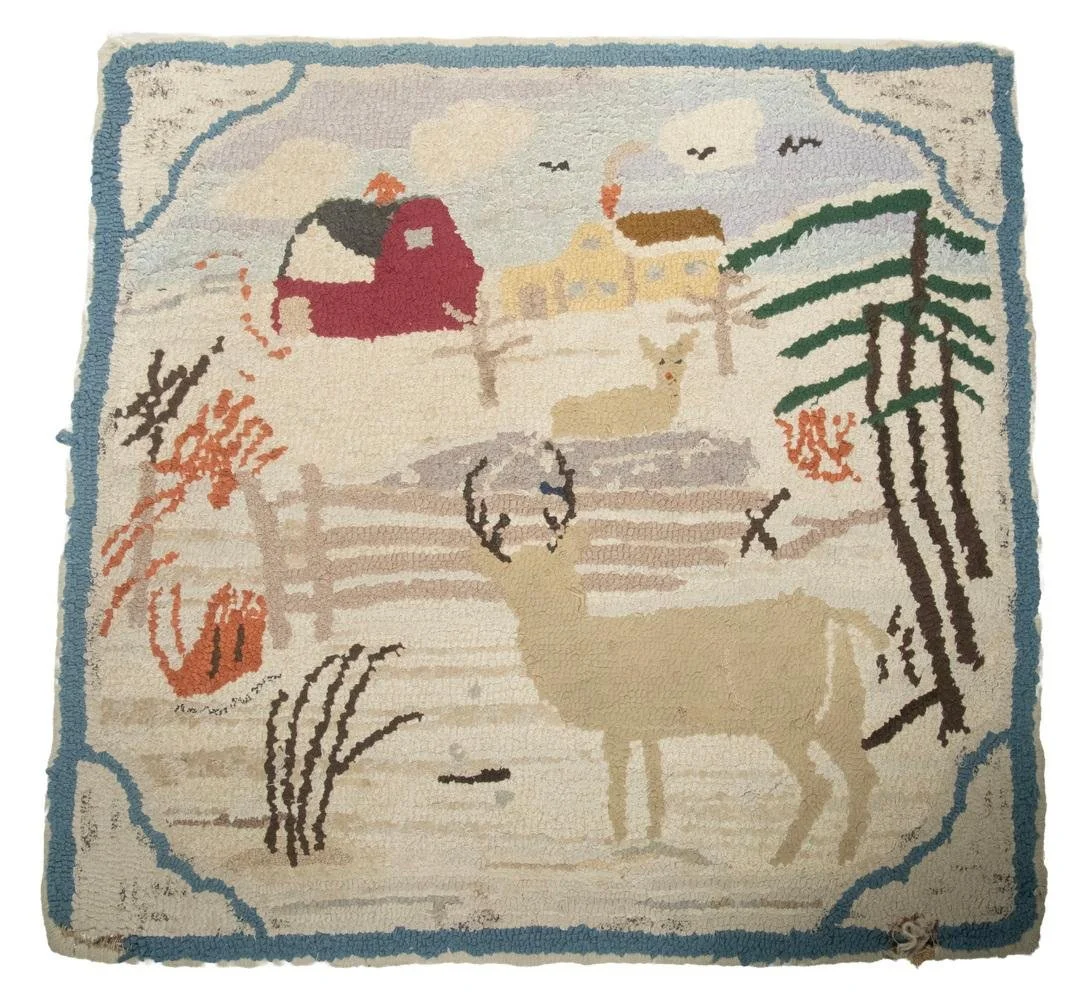
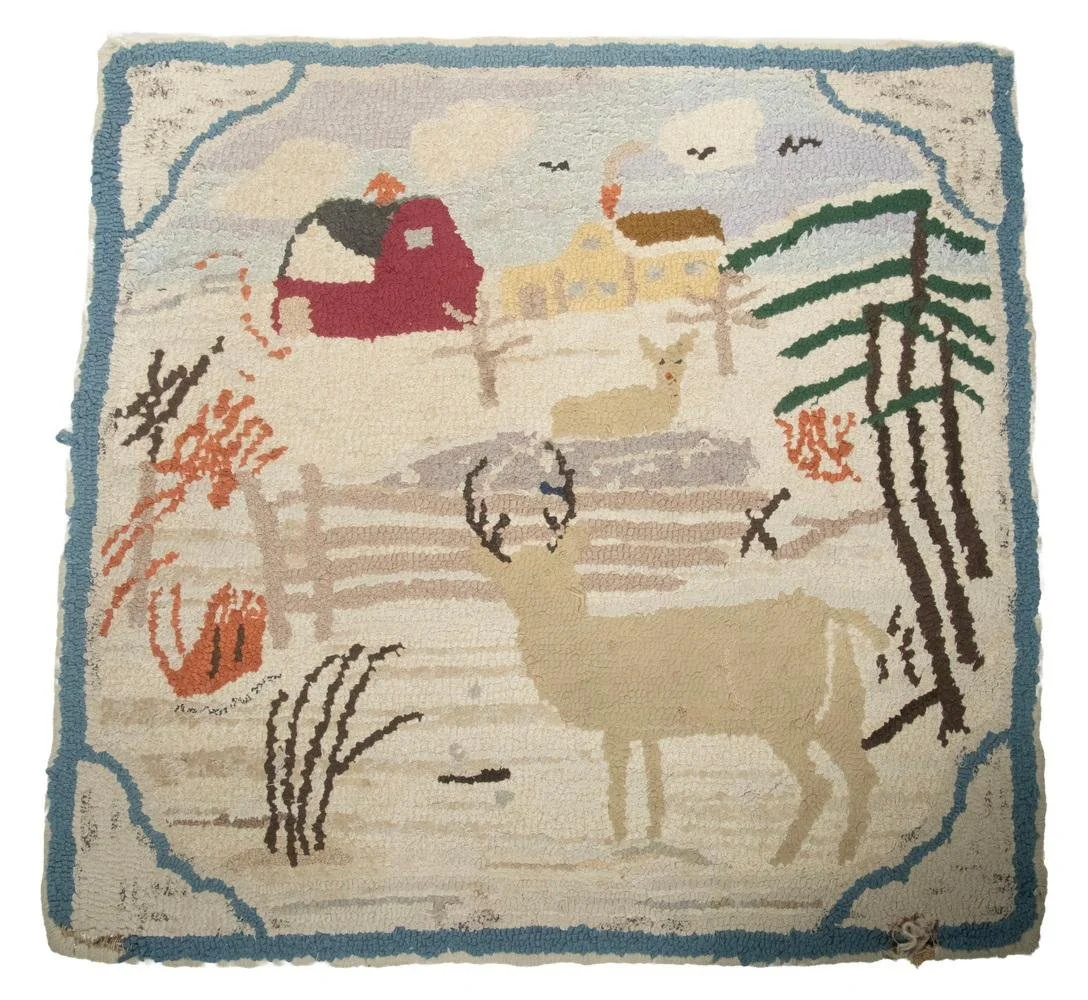
Lot 7159: GAGETOWN PICTORIAL HOOKED RUG
Buck and Deer at Farm Pond in Winter, blue border with brackets, 38" x 40".
Raymond and Lydia Scott might have lived out their lives operating a family farm, had not the Canadian Army required a bigger training camp. And we might not be writing this article today had not noted collectors Larry and Jean Dubord encountered the Scotts and their remarkable expressions of personal creativity.
Ernest Raymond Scott and Lydia Clarke, of deep roots in the Maritimes, married in 1931 and soon took over a farm operated by Lydia's father. There they raised pigs and dairy cattle, living a quiet country life in the tiny New Brunswick community of Summer Hill. It was a settlement founded by eighteenth century Loyalists, and had endured down the years little touched by the twentieth century, a world where the day's work was still built around the rising and setting of the sun. But on a July morning in 1952, with the suddenness of a cannon blast, all that changed.
Since the end of the Second World War, the Canadian Department of National Defence had searched for an appropriate site for a vast new military training complex. That search led them to a site of over 400 square miles in southwestern New Brunswick, centered around the town of Oromocto. Twenty villages fell within this sphere of activity, including Summer Hill, representing about 750 families, most of them farmers or small artisans.
On July 26, 1952, the Department announced that the military intended to take control of the entire territory. Cash settlements were offered to those willing to turn over their land voluntarily, but whether settlements were accepted or not, the land was to be vacated within the next year so that construction of the sprawling new base might begin. Among those receiving notices of expropriation were Raymond and Lydia Scott.
The news struck the couple with the force of a blow. Their farm had been their lives, and its loss hit Raymond Scott especially hard. Grieving for the life they had built together, the couple moved to nearby Gagetown, where not long after, Raymond suffered a heart attack. His recuperation was complicated by his depression, and in an effort to help with her husband's recovery, Lydia Scott suggested that he take up a new hobby — rug hooking.
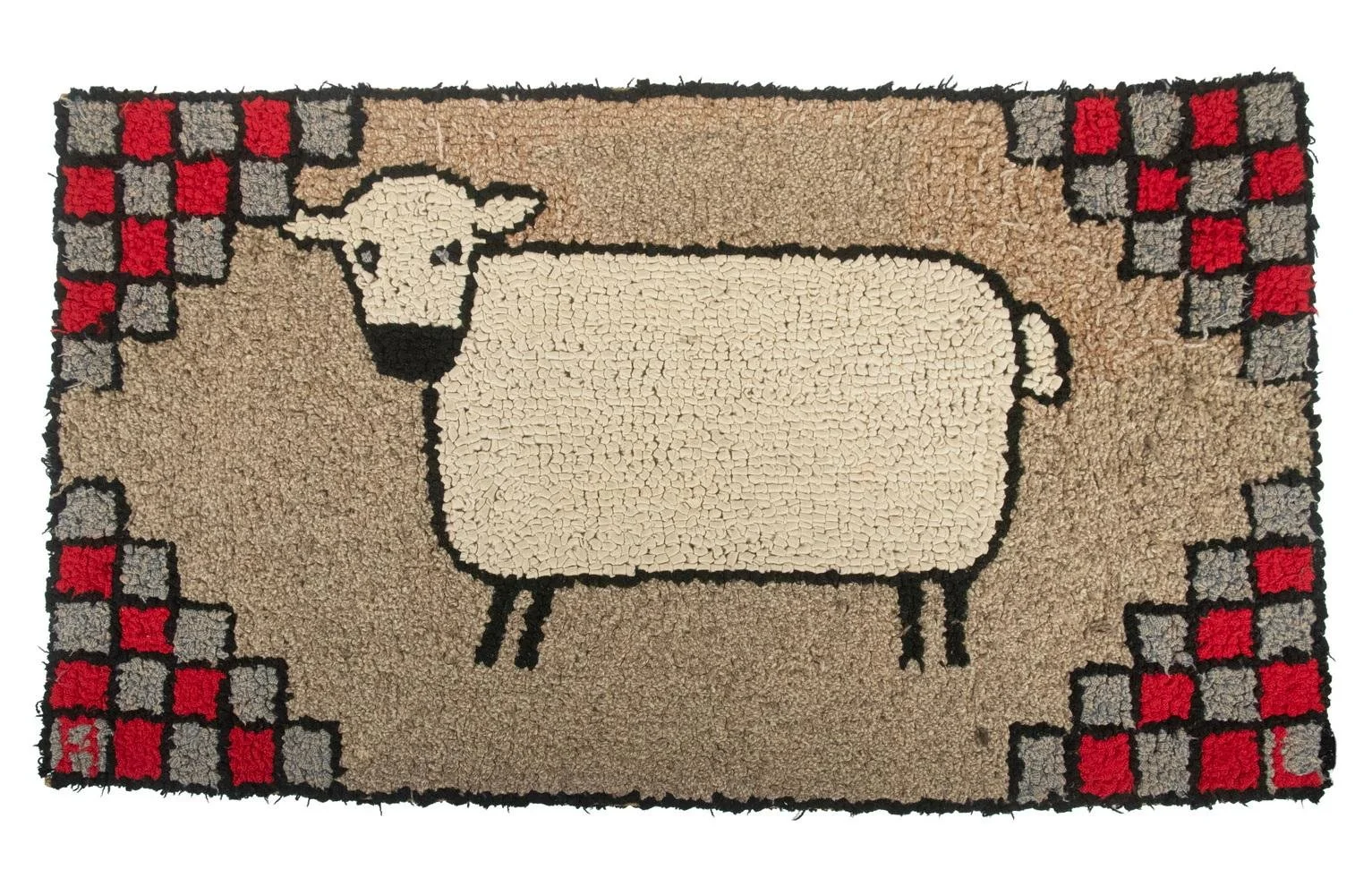
The fact that Raymond was color-blind offered no impediment. Lydia herself would sketch out the basic artwork, and would select the colored yarns for each design, while Raymond took on the actual process of hooking the rugs. Lydia's motifs re-created, through a lens of whimsical nostalgia, images from the Scotts' lives on the Summer Hill farm, bold and colorful scenes of cows and pigs and poultry, and gentle farmscapes. The Scotts used the rugs themselves, offered them to friends, and began to sell them around the Gagetown area.
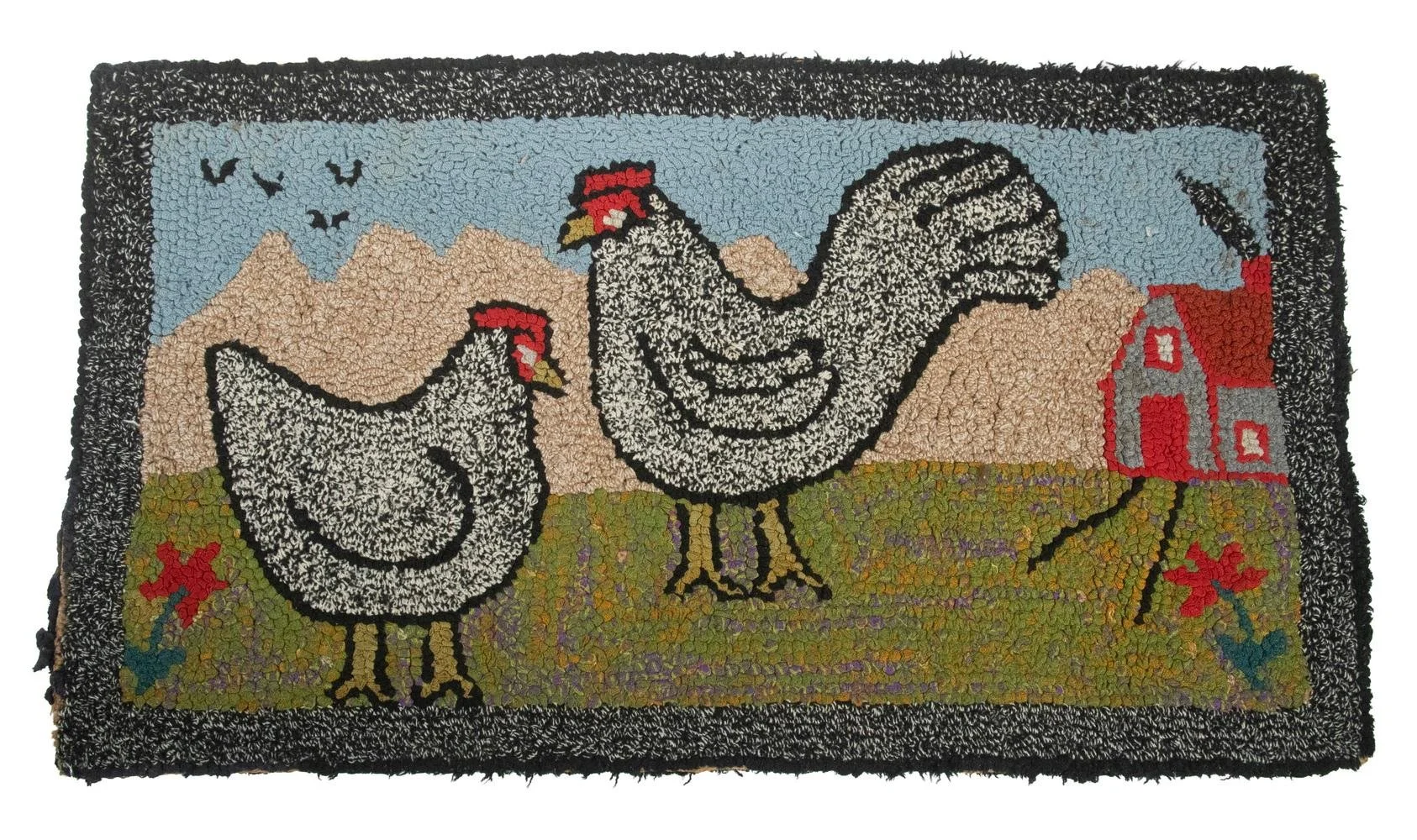
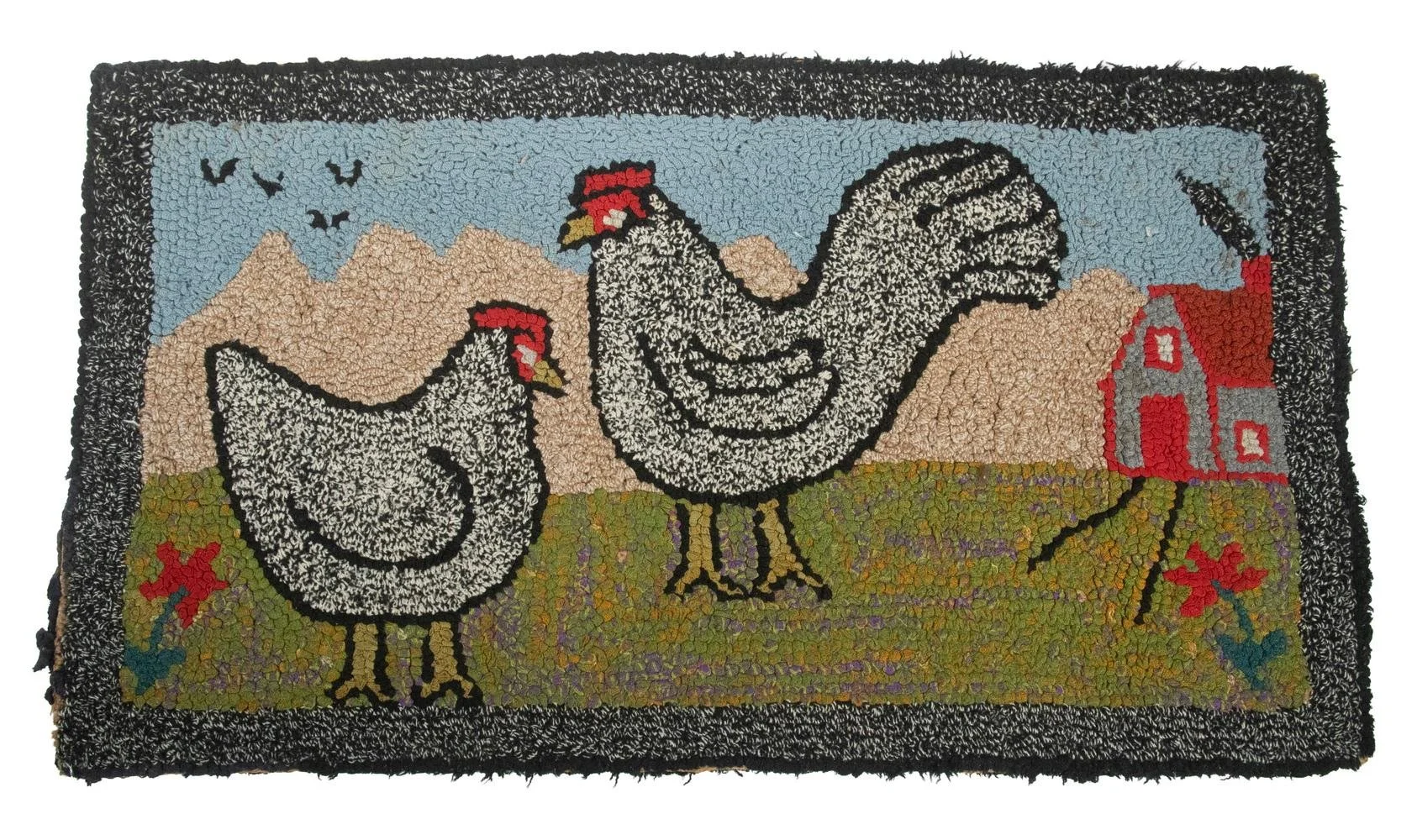
Lot 7099: GAGETOWN PICTORIAL HOOKED RUG
Two White Chickens Outside Farmhouse, in summer landscape, red flowers in lower corners, 22" x 39".
The process of creating the rugs reinvigorated the Scotts. At their peak, they produced two completed rugs per week, with Raymond often devoting twelve to fourteen hours a day to the task. Over the better part of twenty years, the couple became well-known in the Maritime Provinces for their creations as "The Gagetown Hookers." Then in 1981, they met an enthusiastic rug collector from Farmington, Maine. Larry Dubord was about to make the Scotts internationally famous.
Collector, dealer, and auctioneer Larry Dubord had encountered many unique and special pieces over the course of his career, but his encounter with Raymond and Lydia Scott marked a new chapter. He was immediately taken with their colorful, sincere artwork and sturdy rug-crafting technique and after several return visits, developed an arrangement with the couple under which he would import their rugs into the United States for resale.
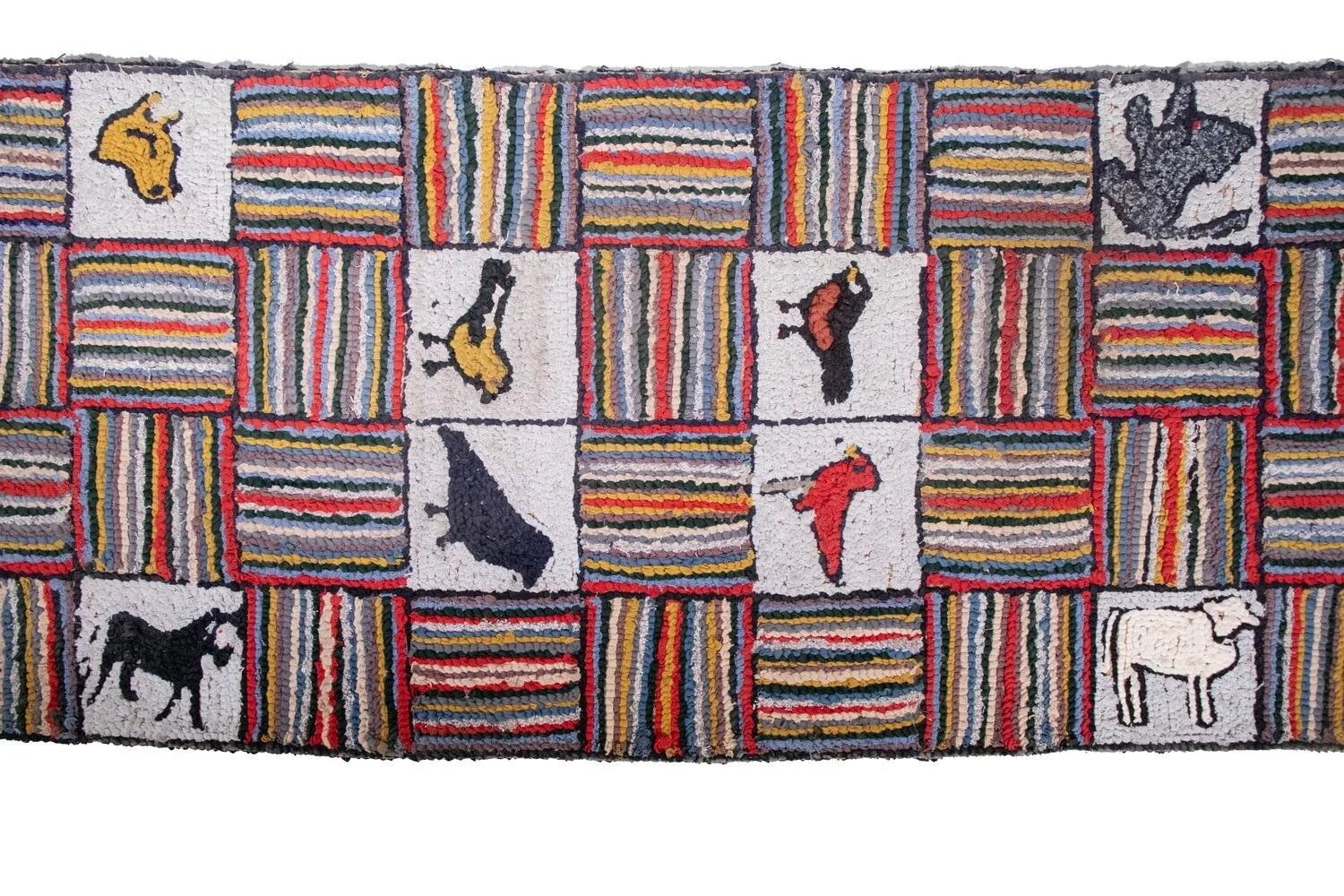
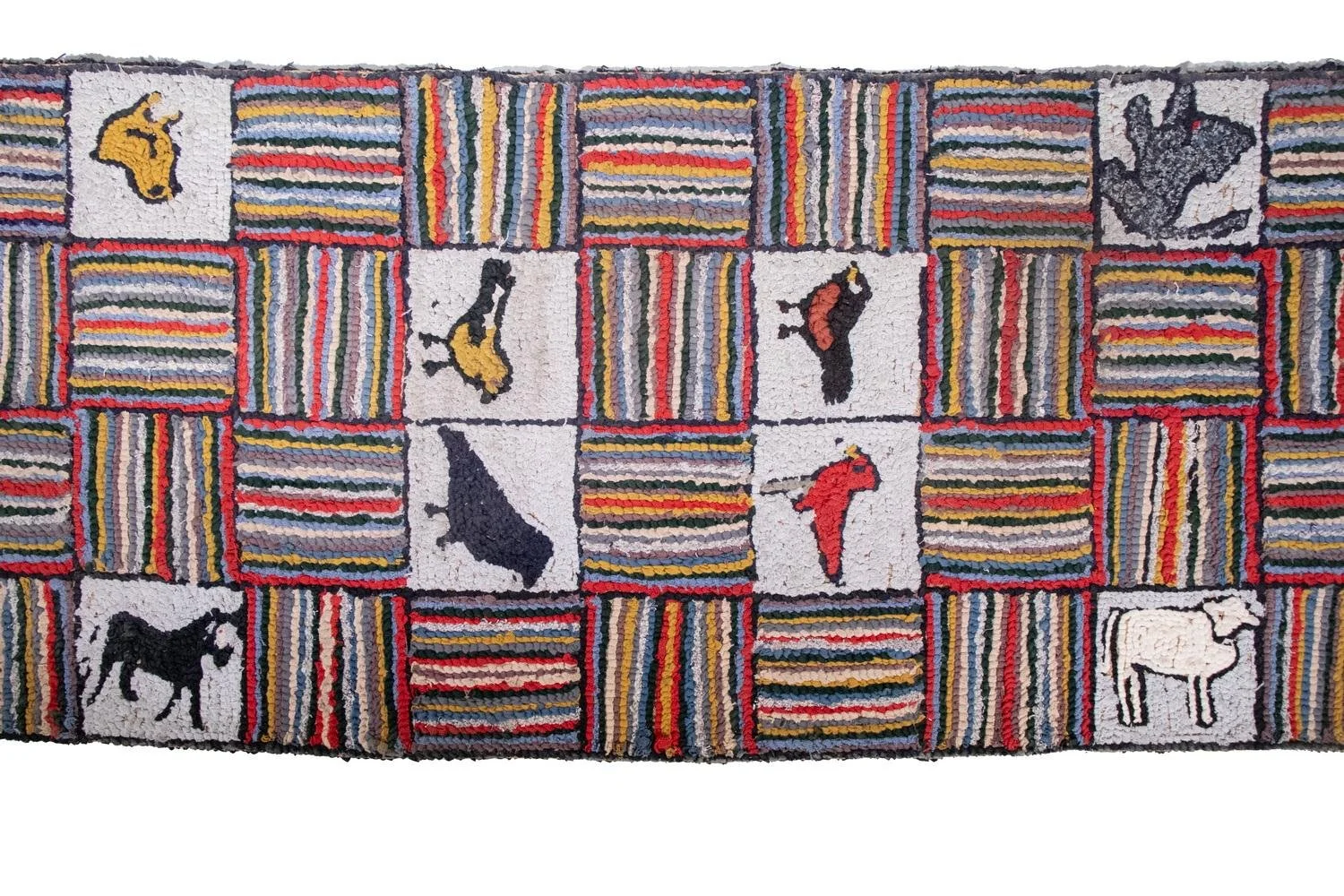
Lot 7091: GAGETOWN PICTORIAL HOOKED RUNNER
Long Runner in rainbow striped squares, in reversing weave, having white squares featuring farm animals: songbird, cat, horse, pig, chickens, chicks, duck, rooster, etc. 31" x 116"
This plan proved advantageous to all parties involved, with Dubord selling almost five hundred Gagetown Hookers originals over the next six years. With cresting interest in the Scotts and their work, Dubord brought their story to print with his 1988 book "The Gagetown Hookers." In this volume, Dubord presented plates of fifty original Scott rugs, along with a concise history placing the couple in the broader context of the culture of rug creation in Atlantic Canada. Privately printed in a limited edition, the Dubord book has gone to become a collectible nearly as prized as the very rugs it chronicles.
Raymond Scott died in 1991, and Lydia followed in 1996, bringing the era of the Gagetown Hookers to its conclusion. But thanks to their unique creativity and to the foresight of their distributor Larry Dubord, their legacy lives on wherever honest country art is known and loved.
We are privileged to offer several original Gagetown Hookers rugs, crafted with love by Raymond and Lydia Scott, direct from the private collection of Larry and Jean Dubord, in our auction of The Americana Collection of the Larry and Jean Dubord Estate on Friday September 19th, starting at 11AM at our galleries in Thomaston, Maine.
Be part of history—celebrate the Scotts’ and the Dubords’ legacy with us. This exclusive event unveils extraordinary Gagetown treasures and a rare collection of historically significant Pictorial Hooked Rugs, alongside other one-of-a-kind collectibles. Don’t miss this once-in-a-lifetime cultural event—and help ensure these legacies are preserved for generations to come.
Phone bidding spots and in-person registrations are limited — secure your place now!
To register for in-person seating, phone bidding, or absentee bidding call 207-354-8141
Explore the full catalog here.
For all other enquiries, please contact us.